Plasticoral is a newly described plastic–coral agglutinate in which melted plastic becomes adhered to and infiltrates the surface pores of coral rubble in reef environments. First documented in Okinawa, Japan, this unusual material represents a physical association between anthropogenic plastic and carbonate reef material, offering new insights into the persistence and transformation of plastic in coral reef environments
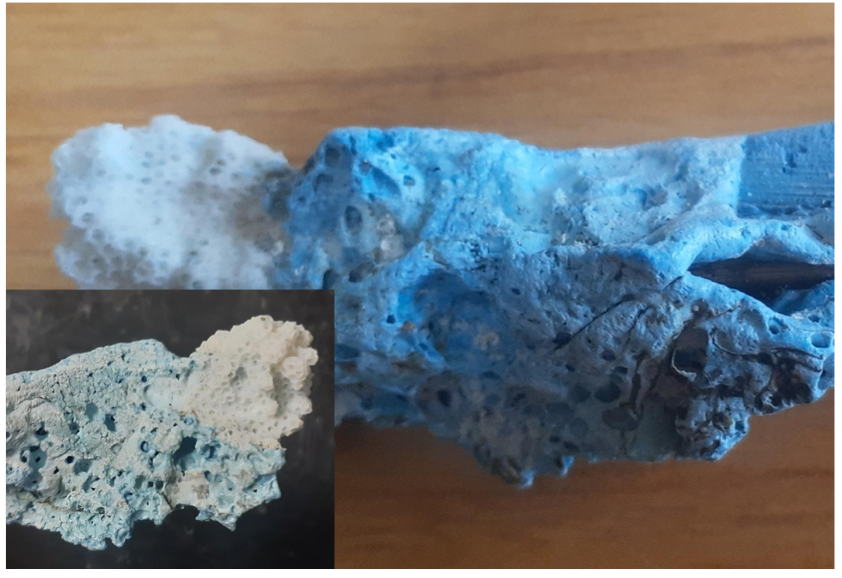
Our recent research from Okinawa Island, Japan, documents an unusual, transformed variant of marine plastic pollution. We called it plasticoral: a biogenic-plastic agglutinate where melted plastic adheres to or becomes agglutinated to coral rubble.
The specimens were collected from three beaches in Okinawa, an island popular for its beautiful coral reefs. Their discovery highlights an important but often overlooked aspect of marine plastic pollution: what happens to plastic litter items that transform and become part of the environment?
What is plasticoral?
Plasticoral is a biogenic-plastic agglutinate in which plastic becomes physically associated with coral-derived materials, in this case, coral rubble. Unlike conventional plastic litter, plasticoral is not simply a piece of plastic lying alongside natural debris. Instead, plastic and natural material become physically joined, producing a composite structure that can resemble ordinary coastline or reef-derived material.
This distinction matters because, in most cases, plastic does not remain unchanged after entering the marine environment. Sunlight, heat, waves, abrasion, weathering, and biological activity can all alter plastic. It can fragment, soften, melt, become colonised by organisms, or become physically attached to natural materials. These processes can produce what researchers describe as transformed or modified plastic forms. transformed or modified plastic litter variants or plastic-rocks. Over time, plastic can become increasingly difficult to recognise as plastic. Plasticoral adds another example to this growing family of transformed plastic materials. Other known forms include pyroplastics, plastiglomerates, plasticrusts, and plastitar.
Where did the name “plasticoral” come from?
The name “plasticoral” actually predates the material itself. My research in MISE laboratory, at the University of the Ryukyus centres more on the interaction between coral reefs and plastic litter items in Okinawa Island. So, I coined “plasticoral” as part of an email address I used to coordinate my different projects. Later, when we encountered this unusual material, the name seemed to fit perfectly. What began as a name for my research theme eventually became the name for a material that embodied that very intersection: plastic and coral.
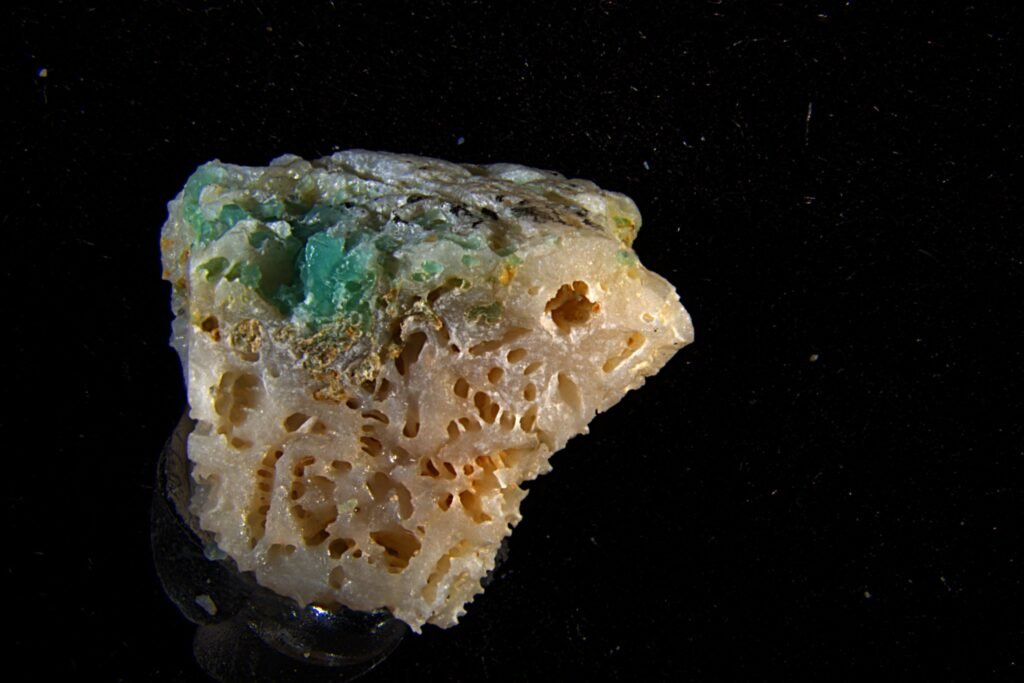
What is plasticoral made of?
The Plastic Component: Raman spectroscopy indicated that the plastic component of plasticoral was consistent with two common polymers: polyethylene (PE) and polypropylene (PP). These polymers are widely used in everyday plastic products, including packaging, containers, and other consumer materials. Their presence highlights how familiar plastic materials can undergo physical transformation after entering coastal and reef environments.
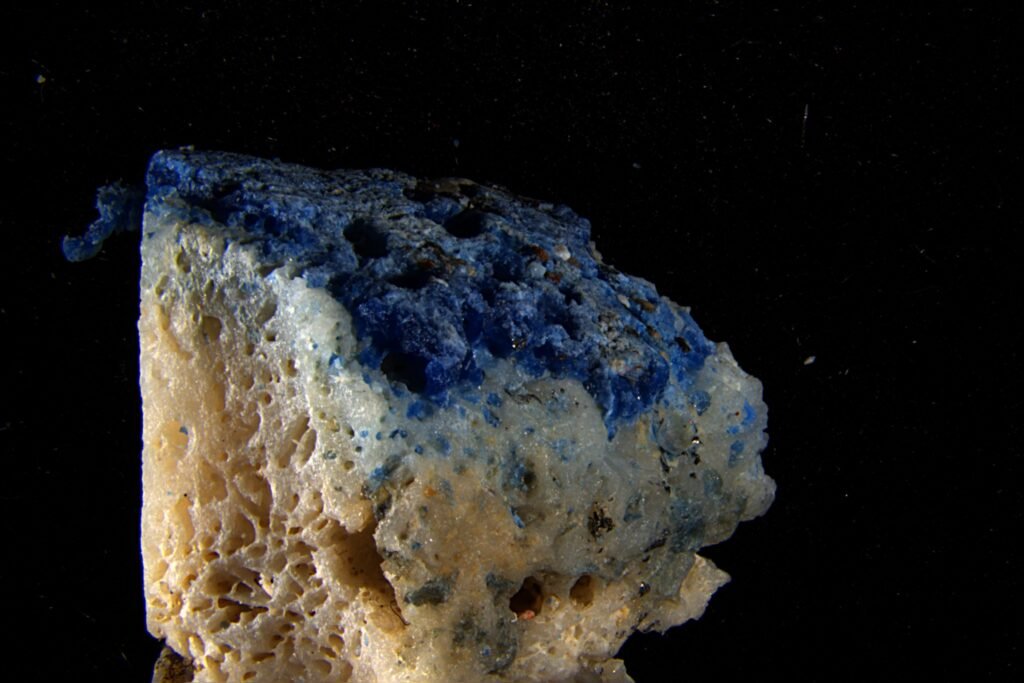
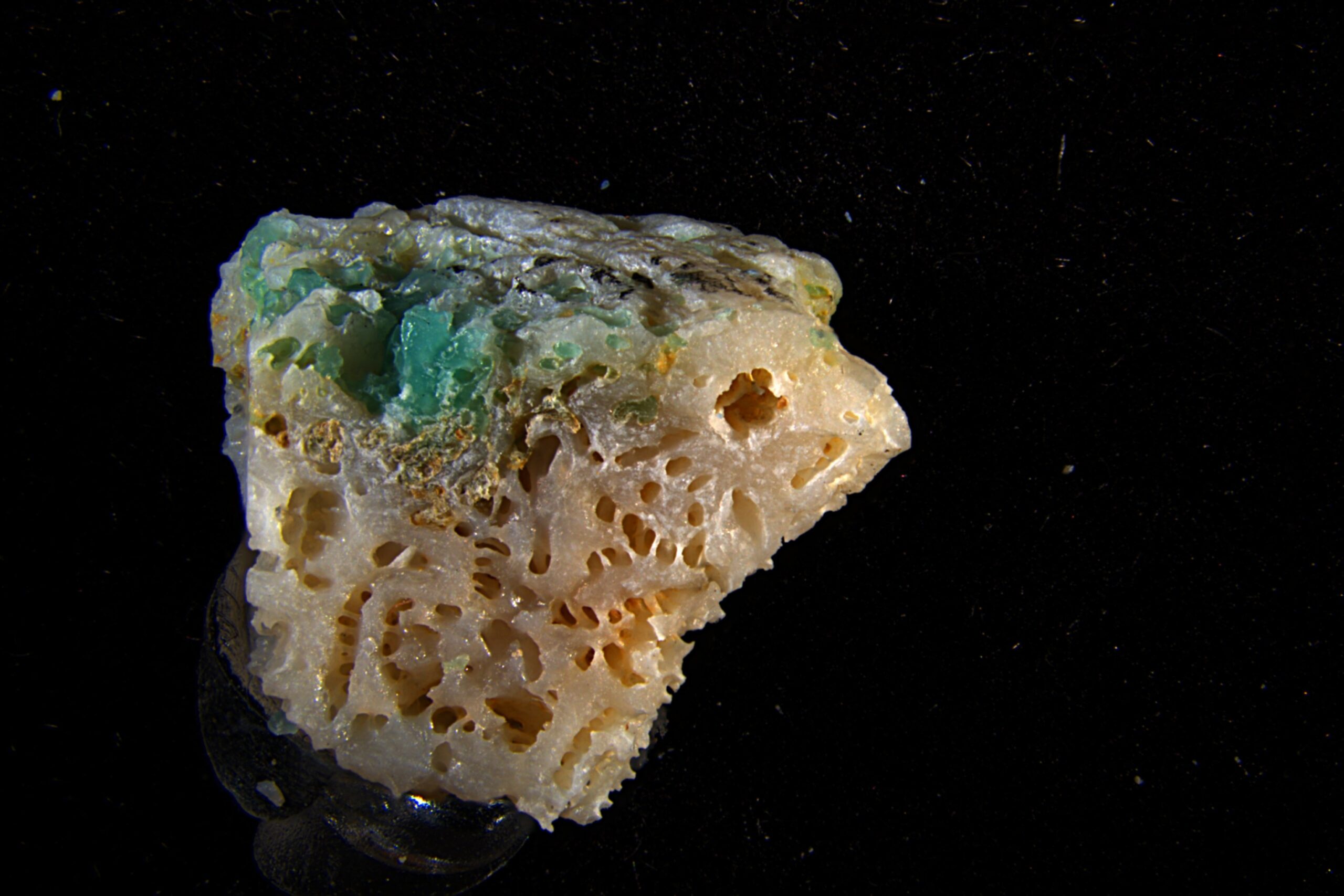
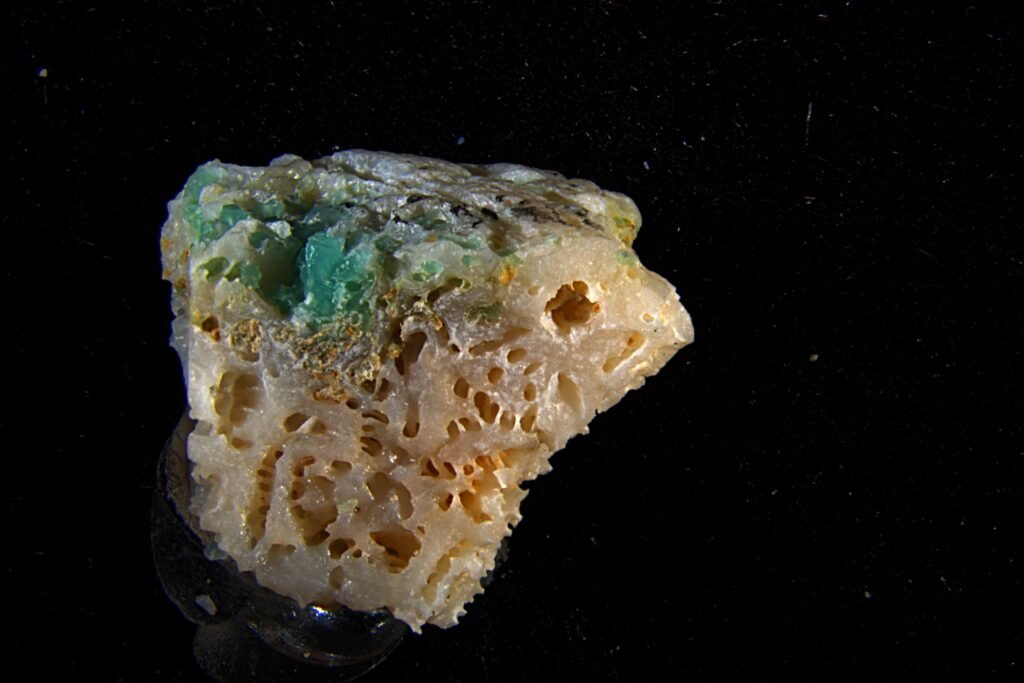
Plasticoral specimen showing the infiltration of surface pores of the coral rubble by melted plastics
The Coral–Plastic Interface: High-resolution micro-CT scanning and microscopy revealed that melted plastic had infiltrated the surface pores of the coral rubble. Rather than simply resting against the coral surface, the plastic had entered small structural cavities within the rubble, creating a close physical association between the plastic and coral-derived material. This interaction produces the distinctive composite structure observed in plasticoral.
Why does plasticoral matter?
At this point, perhaps the most important questions about plasticorals are still unanswered. How does plasticoral form and what environmental conditions promote its formation? How stable is it once formed and how long can it persist? Can organisms colonise it? Does its presence alter the physical or chemical properties of the surrounding material? How widespread is it beyond Okinawa?
These questions will require further observations and experimental research. Understanding plasticoral may ultimately help us to better understand the long-term fate of plastic in coral reef environments.
Looking ahead:What We Still Need to Learn About Plasticoral
The discovery of plasticoral does not yet tell us how widespread this phenomenon is or what its long-term ecological consequences may be. Those questions require further research. Documenting plasticoral provides a good starting point and as we continue to examine these new forms of marine plastic pollution, we may find that the boundary between plastic debris and the natural environment is no longer as clear as it once appeared. Plastic may not simply remain in the reef environment. In some cases, it can become incorporated into the coral-reef associated and derived materials. And that is the story of plasticoral.
About the Research
This article is based on our peer-reviewed publication:
Introducing plasticoral: A biogenic-plastic agglutinate as an emerging indicator of the Plasticene in Okinawa reef environments.
Marine Pollution Bulletin (2026)